


Killian's K9 Academy
Welcome to

About Us

It's our passion.
Teaching K9 Communication
Killian’s K9 Academy, LLC was founded by Rudy Montalvo and his wife Sheri with one clear mission: to help dogs become well-loved members of the family by teaching their owners true K9 communication.
Rudy has over 30 years of dog training experience. After moving from Northwestern New York to North Carolina in 2011, Rudy and Sheri adopted four dogs, Levi, Brenneke, Fritz, and Annie, from local rescues, including the Johnston County Animal Protection League, which they proudly support. They strongly believe in adopting, not shopping, because so many incredible dogs are simply waiting for a second chance.
Levi’s adoption was life-changing. He came with severe resource guarding, reactivity, and other behavioral challenges, and at two and a half years old, he was repeatedly overlooked. Through patience, structure, and consistent work, Levi slowly learned trust and confidence. After a year of dedicated training, he transformed into a loving, social, and well-balanced dog.
Levi’s journey inspired the reopening of Killian’s K9 Academy. Today, Rudy and Sheri specialize in personalized, private training, with a strong focus on helping reactive dogs and their owners navigate real-world challenges. Their goal is to strengthen the bond between families and their dogs and prevent surrender caused by frustration or misunderstanding.
Dogs offer unconditional love, and they deserve the same in return. Learning how to communicate with your K9 is the foundation of a healthy, lasting relationship.
Why We Don’t Use Shock/Static Collars
We’ve seen firsthand the harm shock collars can cause—and have had to help dogs recover from their effects. That’s why we strongly discourage their use.
Here’s why:
-
They cause pain, stress, and fear.
-
They can lead to aggression and behavioral issues like marking or anxiety.
-
They’re often misused and can even cause burns.
-
Humane, effective alternatives exist—so why not use them?
-
Shock collars are banned in many countries due to their risks.
Some say, “It’s just a tap,” but for a shock to change behavior, it must be painful enough to make the dog comply. That’s not training, it’s fear.
As veterinary behaviorist Dr. Karen Overall explains:
“People reach for shock tools when they feel helpless. Companies prey on that fear, but there’s no evidence these collars help—and plenty showing they harm.”
Read more here!
Choose kindness, choose education, choose positive reinforcement and methods that make sense to your dog’s nature.
The Montalvo Pack
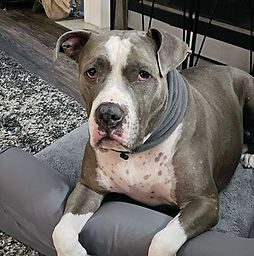
Levi

Brenneke


